Farm
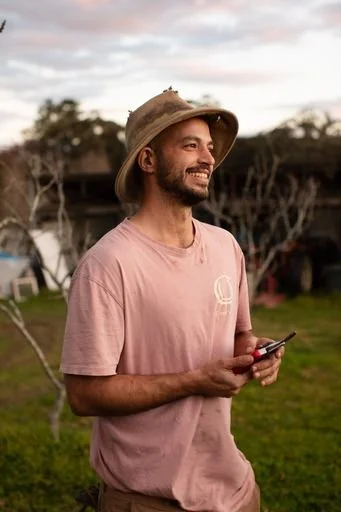
Bilpin Springs Farm is small regenerative family-run farm on Dharug Country in Bilpin, adjoining Wollemi National Park.
It raises sheep, cows, pigs, chickens, and fish, and grows seasonal fruit, vegetables, and flowers. Alongside fresh produce, the farm also makes seasonal ferments and other small-batch goods. These include kimchi, hot sauce, sauerkraut, and ice cream.
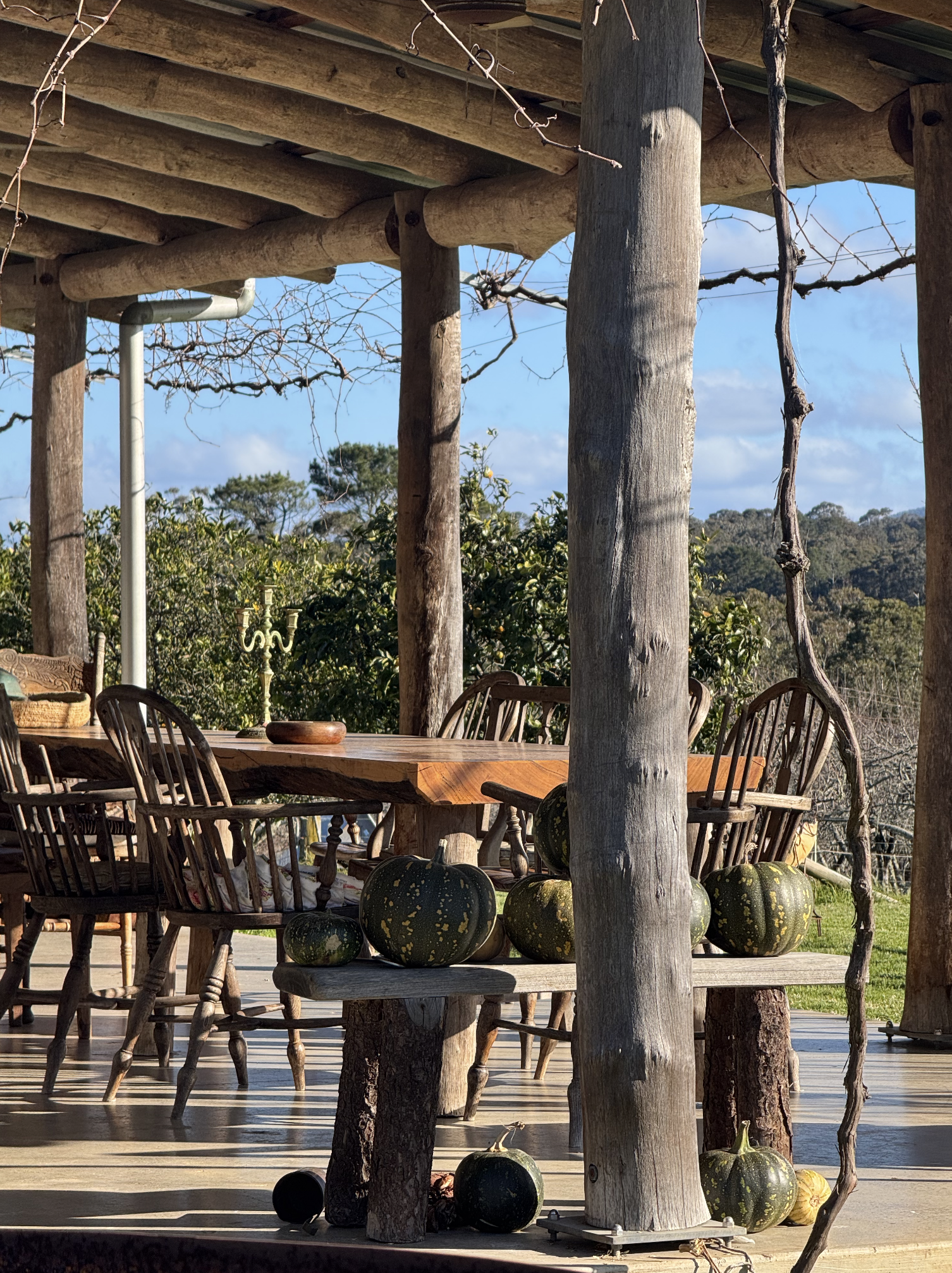
The farm includes paddocks for animals and cropping, two spring-fed dams, and a series of Australian-designed structures made with reclaimed and innovative materials. It backs onto Wollemi National Park and produces seasonal food from a mixed and working landscape.
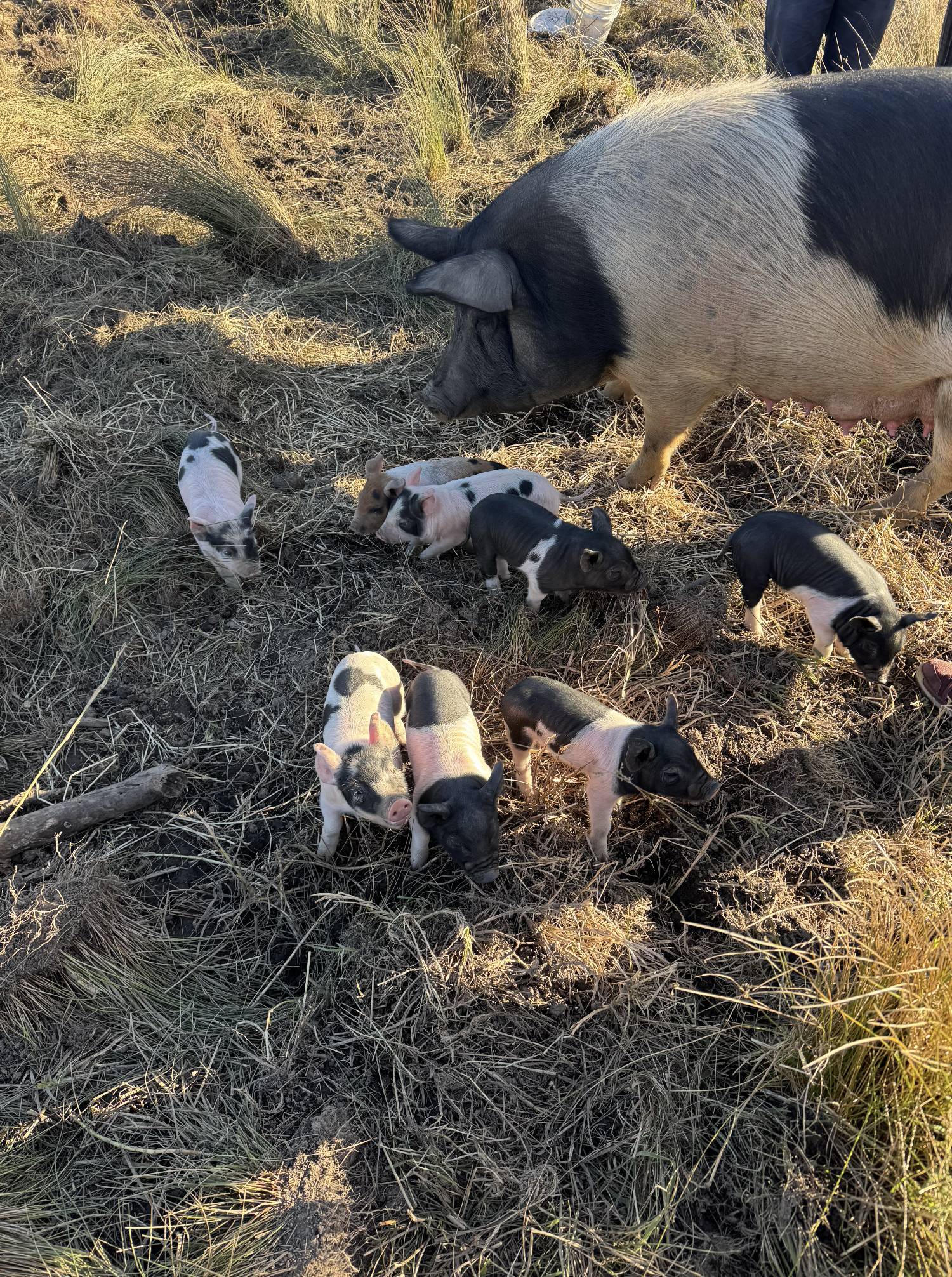
The farm does not specialise in one thing. Its strength is diversity. Different animals, crops, water systems, and by-products that all play a role while also feeding one another.
The approach draws on biomimicry by paying attention to how living systems work: through interdependence, variation, reuse, and adaptation.
There is no claim here of a perfect or closed system. The aim is practical: healthier soil, healthier animals, healthier food, and more life on the land. We want to leave the land in a better condition than it was found, grow good food and have fun along the way.
Ned trained and worked as a chef before turning to farming. Eight years in the kitchen with Hugh Wennerbom, followed by seven years in Tasmania on organic salad, pig, and cattle farms. There, he began consulting on passive watering systems for farms that wanted to hold and use water more effectively across their land.
Over time, he realised that if he wanted more impact on the quality of ingredients, he needed to move further into production rather than stay only in the kitchen. Farming offered a way to shape the whole path from seed in the ground to food on the plate.
By taking responsibility for the entire process, he could put his touch on each step without breaking the link between them.
At the beginning of 2023, Ned moved to Bilpin. The farm was already set up for a farmer-chef, with mixed paddocks, dams, and a working kitchen, which meant he could start farming and cooking straight away.
Ned’s influences include Peter Andrews on water management and landscape hydrology; Charles Dowding on no-dig gardening and soil health; Dan Barber on farm-to-table practice; and Sean Moran, whose work has reinforced for him the elegance of simplicity and the importance of local provenance in food.
Ned Long
Farmer and Chef